Art: Printmaking Concentration

Bachelor’s
7
Personalized Tracks
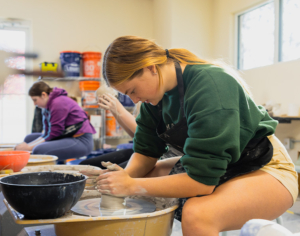
Ceramics. Drawing. Graphic Art. Painting. Photography. Printmaking. And Sculpture. Your studies, customized to your craft, at NGU.
14
Average Class Size
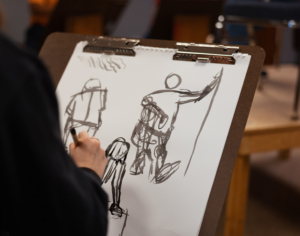
Improve your skills. Collaborate with your peers. Receive personal guidance from experienced professors and guest artists. All thanks to NGU’s smaller class sizes.
2+
Major Productions
NGU’s theatre department plans two major productions each semester. Display your talents as you paint backdrops, build sets, or design costumes. Put your artistic abilities to good use for all to see!

Experience the World of Printmaking

From traditional methods to our modern digital age, explore the history, theory, and conceptual foundations of printmaking. Refine your technical skills in the craft itself and learn various techniques and styles such as intaglio, photogravure, lithography, monotype, book/papermaking, screenprints, woodcuts, and more.

Career paths include working as a freelance or commissioned artist, teaching others as an art teacher and musuem curator, or working as a print production manager or associate for a commercial printer. This specialization equips you with many valuable skills working with various forms of artistic expression, opening doors to many opportunities in the art world and related creative fields. Build your future through your Bachelor of Arts in Art with a concentration in printmaking at NGU.

Why Choose?

  • Degree Flexibility: With an art degree, the possibilities are endless. You can explore diverse and fulfilling careers that allow you to express your creativity and make a meaningful impact.
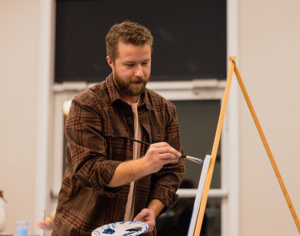
  • Learn from Talented Artists: Learn from professors with lifelong artistic passions and careers. Let your artistic talent guide you as you embark on a journey to pursue a career that aligns with your passions and goals.
  • Contribute to NGU’s Arts Publication: Get exposure and refine your talents through NGU’s literary and arts publication, “The Mountain Laurel.” Publish your work in an annual magazine and get helpful feedback from professional artists.
  • Create a Professional Portfolio: We’ll help you professionally showcase your talent and work to best highlight your achievements.
  • Access to Private Studios: You’re free to create with access to NGU’s state-of-the-art private studios.
  • Exhibitions: NGU’s College of Communication and Fine Arts hosts several exhibits each year. Enjoy the work of your peers and professors while showcasing your own creations for all to see. 

Program Overview

  • Why NGU?

    Become the transformational leader God has called you to be. At NGU, you will learn how to lead others and make a positive impact in your next career.

  • Purpose

    To gain insight into contemporary and traditional art techniques and expand your career potential by creating a professional portfolio of skills and work.

Sample Courses

Studio Art Year 1

Year 1 Sample Courses

  • Drawing
  • Design and Color
  • Digital Imagery
  • Composition and Rhetoric
  • Introduction to Information Technology

Studio Art Year 2

Year 2 Sample Courses

  • Art History
  • Lab Science
  • Foreign Language
Studio Art Year 3

Year 3 Sample Courses

  • Contemporary Art History
  • Social Science Elective
  • New Testament Survey
  • Introduction to Philosophy
  • Lab Science
Studio Art Year 4

Year 4 Sample Courses

  • Exhibition and Portfolio Procedures
  • Oral Communication
  • Concepts of Physical Education
  • Social Science

Get to Know Our Faculty!

Hayley De González, MFA
Department Chair, Art
Andrea Garland, MFA
Assistant Professor, Art
Zac Buser, MFA
Professor, Art

Have Questions about the Art Program or Printmaking Concentration?

profile unknown

Hayley De González, MFA

Department Chair, Art
864.663.0009 hayley.degonzalez@ngu.edu
© North Greenville University. All Rights Reserved. | Accessibility Statement

North Greenville University (NGU) admits students of any race, color, national and ethnic origin to all the rights, privileges programs, and activities generally accorded or made available to students at the school. It does not discriminate on the basis of race, color, national and ethnic origin in the administration of its educational policies, admissions policies, scholarship and loan programs, and athletic and other school-administered programs.